A 4-Point Inspection is a limited inspection commonly required by insurance companies for older homes. It evaluates the four primary systems that most affect insurability and risk: the roof, electrical system, plumbing system, and HVAC (heating and cooling). The inspection focuses on the general condition, visible defects, approximate age, and remaining service life of these systems. The purpose is to help the insurance provider determine whether the home meets underwriting guidelines and identify any conditions that may require repair or replacement before coverage is issued.
 Buyer Residential Home Inspection
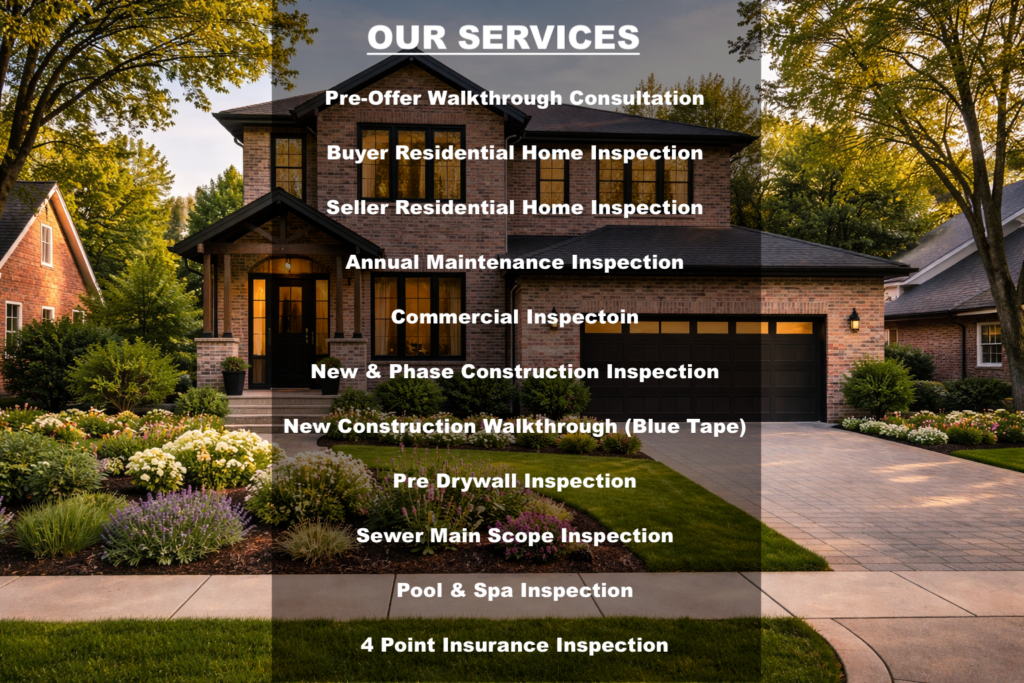
A comprehensive, non-invasive evaluation of a home’s major systems and components to help buyers make an informed purchasing decision. The inspection covers the structure, roof, exterior, electrical, plumbing, HVAC, insulation, and interior, with identified defects and safety concerns clearly documented. All inspections are performed in accordance with ASHI Standards of Practice, ensuring a consistent, professional, and nationally recognized level of inspection quality.
 Seller Residential Inspection
A proactive evaluation of a home’s major systems and components conducted before the property is listed for sale, performed in accordance with ASHI Standards of Practice. It allows sellers to identify defects, safety issues, and maintenance concerns in advance so repairs or disclosures can be addressed upfront. This reduces surprises during buyer inspections, improves negotiating strength, and helps support a smoother, more confident transaction.
Pre-Offer Walkthrough Consultation
A limited, on-site visual walkthrough conducted before submitting an offer. This consultation identifies major concerns such as structural issues, roof condition, visible water damage, safety hazards, and costly defects. Verbal findings are provided during the visit to help you assess risk, prioritize negotiations, and make a more informed purchase decision. This service is not a full home inspection and does not include a written report.
New Construction Inspection
An independent, third-party evaluation of a newly built home to verify that construction was completed properly, safely, and in accordance with current standards. The inspection reviews major structural components, roofing, exterior systems, electrical, plumbing, HVAC, insulation, and interior finishes to identify defects, incomplete work, or installation issues before closing or builder warranty expiration. This inspection provides buyers with a detailed report of concerns so they can request corrections from the builder and move into their new home with confidence.
Phase Construction Inspection
Performed at key stages of the building process to identify issues before they become hidden or costly to correct. Common phases include the foundation stage (prior to concrete placement), the pre-drywall stage (after framing, plumbing, electrical, and HVAC rough-ins), and the final stage before closing. Each inspection verifies that major components are installed properly, meet current standards, and follow accepted construction practices. This process helps ensure quality workmanship, allows problems to be addressed early by the builder, and provides the buyer with independent oversight throughout construction.
Annual Maintenance Inspection
A comprehensive review of a home’s major systems and components performed on a routine basis in accordance with ASHI Standards of Practice. It helps identify developing issues, safety concerns, and deferred maintenance before they become costly repairs. Regular inspections also support proper documentation of maintenance, which is often required to help preserve manufacturer warranties and extend the service life of home systems.
Commercial Inspection
A comprehensive evaluation of a commercial property’s major systems and components conducted in accordance with ASHI Standards of Practice. It provides property owners, buyers, and investors with a clear understanding of the building’s condition, safety concerns, and deferred maintenance. This information supports informed decision-making, budgeting for repairs, and risk management prior to purchase or continued operation.
4 Point Insurance Inspection